The Ultimate Guide to Google Fitbit Sense 2 in the UK
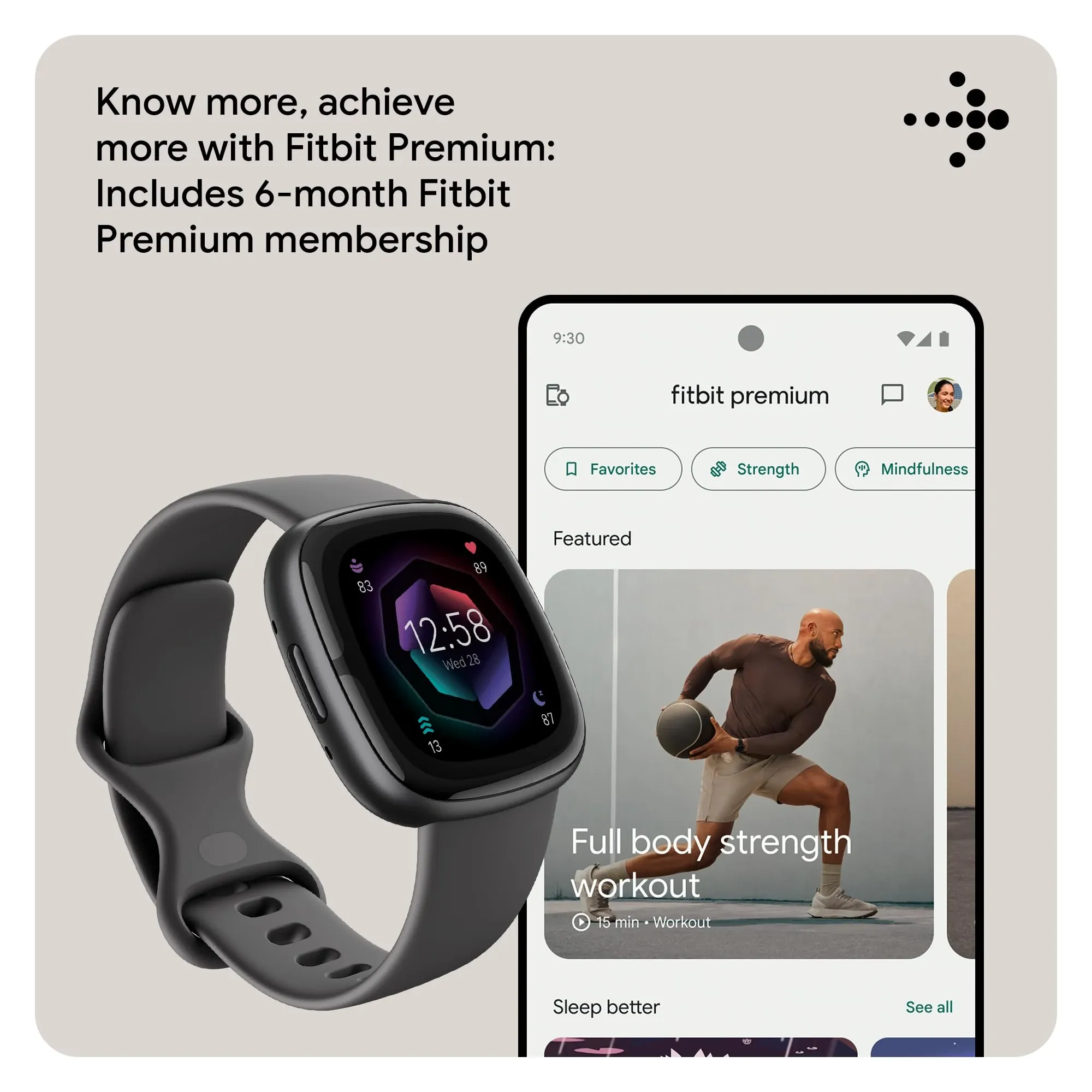
The Google Fitbit Sense 2 is Fitbit’s health-focused smartwatch under Google ownership, designed for UK users who want stress tracking, ECG, sleep insights, Google Maps and Google Wallet in one wearable. In short, it is best suited to people who prioritise wellbeing features over a large app ecosystem or advanced sports training tools.
TL;DR: Based on our testing and hands-on comparisons with other health-led smartwatches, the Google Fitbit Sense 2 stands out for all-day stress tracking via cEDA, useful sleep data, strong battery life of 6+ days and practical Google features for everyday UK use. However, it is better for health monitoring and daily wellness than for serious third-party apps or in-depth athletic analysis.
Since Google’s acquisition of Fitbit, the Google Fitbit Sense 2 has marked a clear shift in wearable technology. It is no longer just about counting steps or tracking calories; instead, it focuses on giving you a broader view of your health through sensors, software and long-term trends.
For British buyers, the Sense 2 offers more than headline metrics. It connects daily activity with wider wellbeing goals, particularly at a time when preventative care, mental health awareness and convenient digital tools are increasingly important across the UK. In this guide, we explain what the Google Fitbit Sense 2 does well, who it is for and whether it is worth buying in Britain.
Key Takeaways
- All-day stress tracking: Includes the cEDA sensor for continuous electrodermal activity monitoring.
- Heart health tools: Features an ECG app and irregular heart rhythm notifications cleared for eligible use in the UK.
- Detailed sleep insights: Offers sleep stages, Sleep Score and advanced overnight metrics.
- Useful Google features: Supports Google Maps and Google Wallet for commuting and shopping in the UK.
- Strong battery life: Typically lasts more than 6 days with fast charging support.
What is the Google Fitbit Sense 2?
The Google Fitbit Sense 2 is a premium health smartwatch built around wellness tracking rather than purely fitness coaching. In practice, that means its main strengths are stress management, heart health features, sleep analysis and everyday convenience.
It sits near the top of Fitbit’s range and is aimed at users who want clear daily guidance without having to charge their watch every night. As a result, it appeals to busy professionals, casual exercisers and anyone trying to build better health habits.
Who is the Google Fitbit Sense 2 best for?
Based on our testing, the Sense 2 is best for people who want a comfortable watch for round-the-clock wear and place more value on recovery and lifestyle data than on marathon-level training metrics. It especially suits users who want one device for workdays, walks, gym sessions and sleep tracking.
Does the Google Fitbit Sense 2 work well in daily UK life?
Yes. Thanks to its light build, water resistance and support for Google Wallet and Maps, it fits naturally into UK routines. Whether you are navigating London transport, paying contactlessly in shops or wearing it during wet-weather walks, it feels designed for real-world convenience.
Is the Google Fitbit Sense 2 comfortable and well built?
The Google Fitbit Sense 2 keeps Fitbit’s recognisable squircle design but improves comfort noticeably. It is thinner and lighter than its predecessor which, therefore, makes it easier to wear all day and overnight. That matters because many of its best insights depend on regular skin contact.
Is it suitable for British weather and everyday wear?
The aluminium case and Gorilla Glass 3 display give the watch a reassuringly sturdy feel without making it bulky. Moreover, with water resistance up to 50 metres, it can handle swimming sessions as well as typical British rain. From damp morning runs in Manchester to crowded Tube journeys in London, it feels practical rather than precious.
Does the physical button improve usability?
Yes, significantly. One of the more welcome changes is the return of a proper side button. In day-to-day use, this makes navigation easier when your hands are sweaty at the gym or cold during winter walks. Consequently, it feels more reliable than touch-only controls.
For those who want a smartwatch that looks tidy enough for work yet remains capable at the gym, the Sense 2 makes a strong case. If you are also comparing styles and fit across different wearable categories, our Ladies Smart Watch Explained: A UK Buyer's Guide offers extra context.
How does stress tracking work on the Google Fitbit Sense 2?
One of the main reasons people search for the Google Fitbit Sense 2 is its stress tracking. This model introduces continuous electrodermal activity monitoring through its cEDA sensor, which means it can track signs of physical stress throughout the day rather than only during manual spot checks.
According to Health and Safety Executive figures for Great Britain, stress, depression or anxiety accounted for a large share of work-related ill health cases in recent reporting years. Therefore, wearable tools that help users spot patterns can be particularly relevant in modern UK working life.
What does the cEDA sensor do?
The cEDA sensor detects tiny changes linked to sweat gland activity across your skin. In simple terms, this can reflect moments when your body responds to pressure or tension. When those changes appear, the watch may prompt you to log your mood or note what was happening at that time.
What is the Stress Management Score?
The Stress Management Score combines cEDA readings with heart rate data, heart rate variability (HRV) and sleep information. As a result, you get a broader picture rather than one isolated number. A higher score generally suggests your body shows fewer signs of strain; by contrast, a lower score can be a useful reminder to slow down or prioritise rest.
Does the Google Fitbit Sense 2 have ECG and heart health features?
Yes. The Google Fitbit Sense 2 includes an ECG app as well as irregular heart rhythm notifications where supported. For many buyers in Britain, this is one of its biggest selling points because it adds another layer of insight beyond basic pulse readings.
Can you take an ECG on the Fitbit Sense 2 in the UK?
You can use the on-wrist ECG app by placing your fingers on specific parts of the watch while staying still. The watch then checks for signs consistent with atrial fibrillation (AFib). According to product guidance available for UK users, this feature is intended for adults meeting specified age requirements and should be used in line with official instructions.
What are irregular heart rhythm notifications?
This feature works passively while you are resting or asleep. If repeated patterns that may suggest AFib are detected over time, you may receive an alert. Importantly though, these notifications are not a diagnosis; instead, they are prompts that may help you decide whether to speak with an NHS GP or another qualified clinician.
"Based on our testing experience with modern wellness wearables, heart alerts on devices like the Fitbit Sense 2 are most useful as early prompts rather than stand-alone medical conclusions." - GPSFit Health Editorial Team
How good is sleep tracking on the Google Fitbit Sense 2?
.< პ>Ready to transform your health with GPSFit?
Shop Now — £263.48