The Ultimate Guide to Google Fitbit Sense 2 in the UK
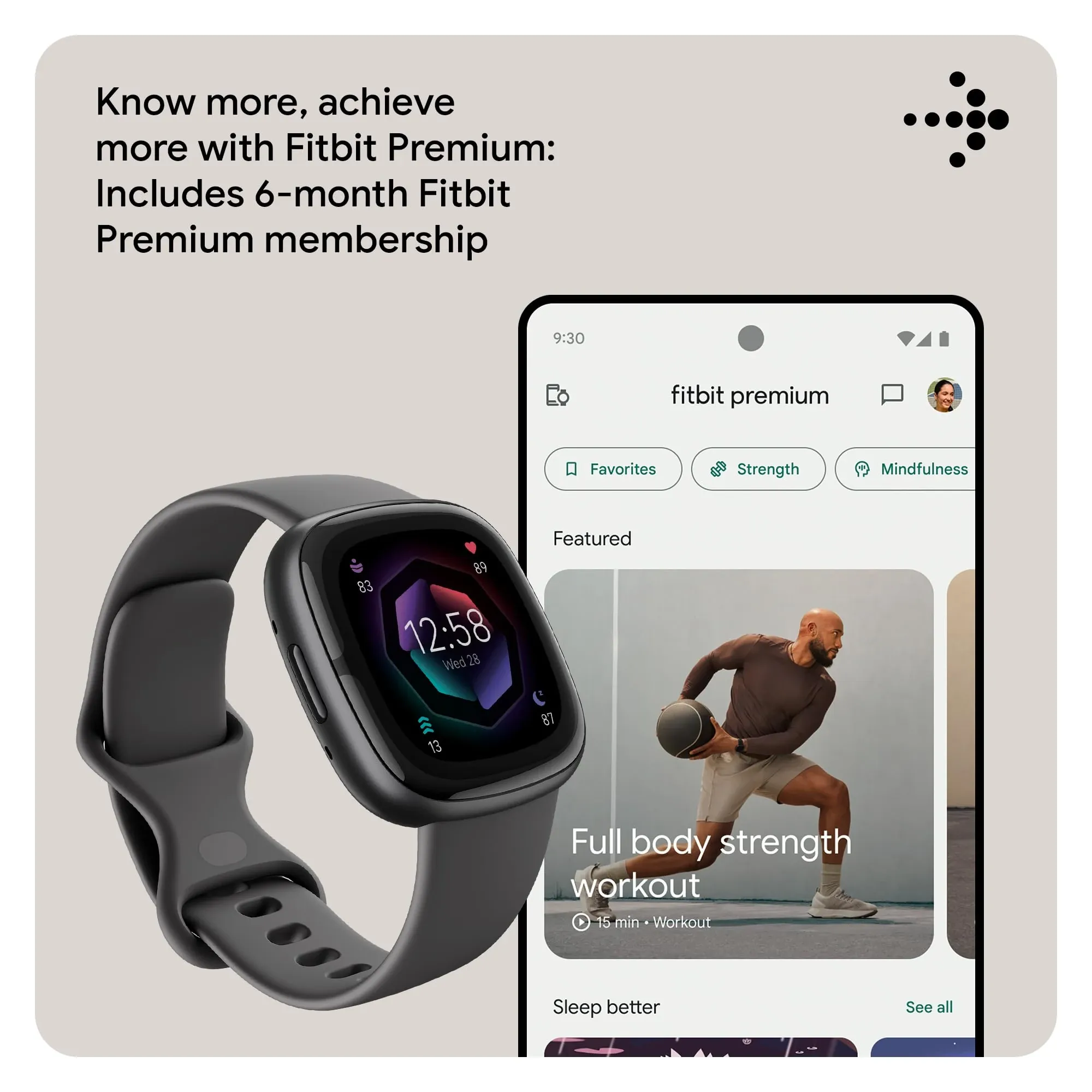
The Google Fitbit Sense 2 is Fitbit's health-focused smartwatch, built around one idea: making everyday wellbeing visible. It combines continuous cEDA stress tracking, an ECG app, PurePulse 2.0 heart rate, SpO2 and skin-temperature trends, sleep stages and built-in GPS, with up to six days of battery so the data rarely has gaps. This guide walks through what each feature actually does in real UK life, and where its honest limits are.
Who is the Google Fitbit Sense 2 for?
If your day runs from a commute into back-to-back meetings and late emails, it is easy to stay tense for hours and only notice once a headache or a broken night arrives. A phone meditation app only records the few minutes you deliberately open it. The Sense 2 is aimed squarely at this problem: passive, all-day tracking that surfaces patterns you would otherwise miss, rather than another app to remember to use.
How does cEDA stress tracking work?
The Sense 2's continuous cEDA sensor watches for tiny changes in the skin's electrical activity that tend to accompany the body's stress response, and rolls them into a daily Stress Management Score. Used well, it helps you connect a spike to a specific meeting, a coffee, or a poor night's sleep — a prompt to take a breath or a short walk. It is a wellbeing signal, not a diagnosis of anxiety, and it works best when you wear the watch consistently across the week.
What about ECG and heart-health features?
The Sense 2 includes an ECG app and irregular heart rhythm notifications, alongside 24/7 PurePulse 2.0 heart rate. These are designed to surface things worth discussing with a clinician — not to replace one. If you get a notification or see a reading that worries you, the right next step is your GP, not the watch.
Sleep, SpO2 and everyday sensors
Overnight, the watch tracks sleep stages, estimated blood-oxygen (SpO2) variation and skin-temperature trends, which together give a fuller sense of recovery than a simple hours-slept figure. As with stress, treat these as trends to learn from over weeks, not single-night verdicts.
GPS and battery in daily use
Built-in GPS with GLONASS records outdoor routes and pace without your phone, and the watch is water resistant to 50m for rainy commutes and showers. Battery is rated up to six days, with a 12-minute fast charge for roughly a day — we cover real-world runtime, including how GPS affects it, in the Fitbit Sense 2 battery life guide. At 37.6g it is light enough for all-day and overnight wear.
How it compares, and what it costs
Against a Samsung or Apple watch, the Sense 2 trades on-wrist apps for longer battery and deeper stress and sleep insight; if you are weighing that trade-off, our Samsung smart watch comparison lays it out. Core tracking works without a subscription, with only some deeper analysis behind Fitbit's optional Premium tier. At GPSFit the Sense 2 is £263.48 including VAT, with free next-day UK delivery, 30-day returns and a 12-month warranty. View full specs and order the Fitbit Sense 2.
Frequently Asked Questions
What does the cEDA sensor on the Google Fitbit Sense 2 do?
It continuously measures small changes in skin electrical activity linked to the body's stress response and turns them into a daily Stress Management Score, helping you spot what raises your stress. It is a wellbeing signal, not a medical diagnosis.
Can you take an ECG on the Fitbit Sense 2 in the UK?
Yes, the Sense 2 has an ECG app and irregular heart rhythm notifications. They are designed to flag readings worth discussing with a GP or clinician, not to replace professional assessment.
How long does the Google Fitbit Sense 2 battery last?
Up to six days per charge with typical use, with a 12-minute fast charge giving about a day. Heavy built-in GPS use shortens this; our battery life guide covers real-world figures.
Is the Google Fitbit Sense 2 a medical device?
No. Its stress, SpO2, ECG and heart-rate features are wellbeing tools that can prompt you to seek advice, but they do not diagnose conditions. Always speak to your GP about health concerns.
Ready to transform your health with GPSFit?
Shop Now — £263.48